Climate
over view of Punjab villages climate
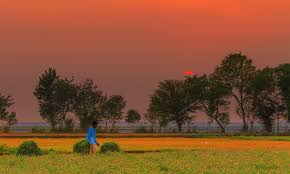
Sunset in Punjab, during summer
Most areas in Punjab experience extreme weather with foggy winters,
often accompanied by rain. By mid-February the temperature begins to
rise; springtime weather continues until mid-April, when the summer heat
sets in.
The onset of the southwest
monsoon
is anticipated to reach Punjab by May, but since the early 1970s the
weather pattern has been irregular. The spring monsoon has either
skipped over the area or has caused it to rain so hard that floods have
resulted. June and July are oppressively hot. Although official
estimates rarely place the temperature above 46 °C, newspaper sources
claim that it reaches 51 °C and regularly carry reports about people who
have succumbed to the heat. Heat records were broken in
Multan in June 1993, when the
mercury was reported to have risen to 54 °C. In August the oppressive heat is punctuated by the
rainy season, referred to as
barsat,
which brings relief in its wake. The hardest part of the summer is then
over, but cooler weather does not come until late October.
Recently the province experienced one of the coldest winters in the last 70 years.Punjab's region temperature ranges from −2° to 45 °C, but can reach
50 °C (122 °F) in summer and can touch down to −10 °C in winter.
Climatically, Punjab has three major seasons.
- Hot weather (April to June) when temperature rises as high as 110 °F.
- Rainy season (July to September). Average rainfall annual ranges between 96 cm sub-mountain region and 46 cm in the plains.
- Cooler/ Foggy / mild weather (October to March). Temperature goes down as low as 40 °F.
Weather extremes are notable from the hot and barren south to the cool hills of the north. The foothills of the
Himalayas are found in the extreme north as well, and feature a much cooler and wetter climate, with snowfall common at higher altitudes.
https://www.blogger.com/blogger.g?blogID=5405056031198541910#editor/target=post;postID=5130178106843928215

Comments
Post a Comment